A realistic timeline
Many people lose about half their pregnancy weight by six weeks after birth, from the baby, placenta, fluid and the shrinking uterus. MedlinePlus suggests waiting until your six-week checkup before trying to slim down, and notes that returning to pre-pregnancy weight within 6 to 12 months is a reasonable goal.
If you're breastfeeding, MedlinePlus advises waiting until your baby is at least 2 months old and your milk supply has settled before cutting calories sharply. After that, a gradual pace of no more than about 1 to 1.5 lb a week is gentler on recovery and supply.
Breastfeeding and calories
The CDC says well-nourished breastfeeding mothers generally need an extra 330 to 400 calories a day compared with before pregnancy, and some sources cite about 500 for exclusive breastfeeding. Needs vary with age, body size, activity and whether you breastfeed exclusively.
A rough example: a 32-year-old who is 5 ft 5 in and 165 lb burns about 2,007 calories on a lightly active day by the Mifflin-St Jeor estimate. Adding 330 to 400 for breastfeeding puts her near 2,340 to 2,410. Once she's cleared and her supply is steady, a gentle gap of 300 to 500 calories means eating roughly 1,850 to 2,100. Standard formulas, including our TDEE calculator, aren't built for lactation, so treat this as a starting point and watch your supply and energy.
What to eat while recovering
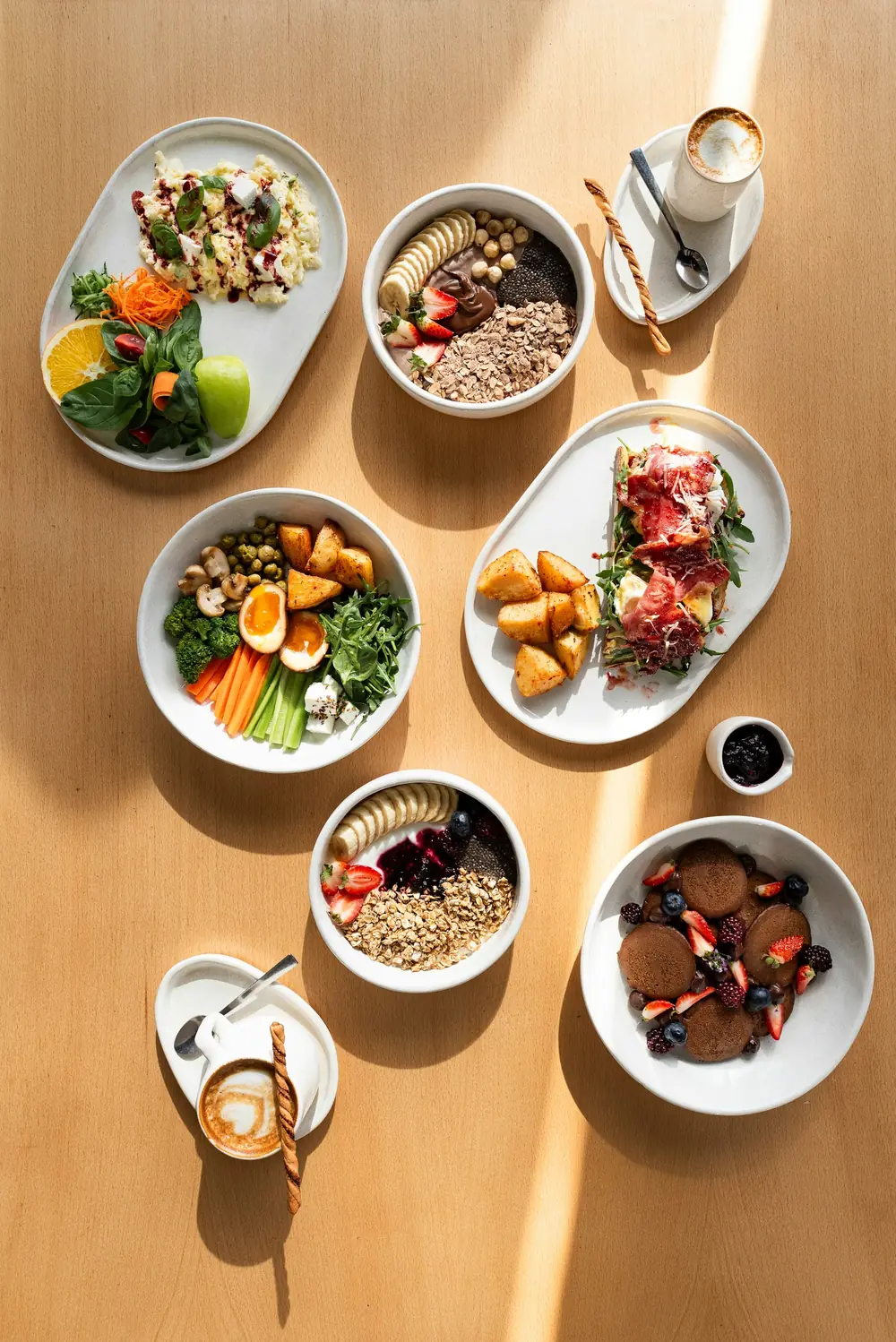
- Protein at each meal for healing and fullness: eggs, yogurt, beans, poultry or fish
- Low-mercury fish: the CDC suggests up to 2 to 3 servings (8 to 12 oz) a week from the "best choices" list while breastfeeding
- Whole grains, fruit and vegetables for fiber, which also helps with postpartum constipation
- Water with each feeding; many people feel thirstier while breastfeeding
- Caffeine in moderation, about 300 mg a day or less, roughly 2 to 3 cups of coffee
Keep easy one-handed snacks within reach. Skipping meals in the newborn weeks often leads to big evening hunger.
Moving again, gradually
The CDC's guidance for postpartum adults is at least 150 minutes of moderate aerobic activity a week, such as brisk walking, which you can build up to over time. Ask your doctor or midwife when and how to restart, especially after a cesarean birth or a complicated delivery. Short walks with the stroller are a common first step.
Stop and call your provider if exercise brings heavy bleeding, pain or dizziness. The walking guide has an easy progression.
Your pelvic floor comes first
Pregnancy and birth stretch the muscles that support the bladder, uterus and bowel. MedlinePlus describes Kegel exercises: tighten the pelvic floor muscles as if holding in gas, hold for 3 to 5 seconds, relax for 3 to 5 seconds, and repeat 10 times, 3 times a day. Many people notice improvement after 4 to 6 weeks.
Leaking urine, a feeling of heaviness, or a bulge in the vagina are worth raising with your provider. A pelvic floor physical therapist can help, and a check is sensible before you return to running or heavy lifting.
GLP-1 medicines and breastfeeding
Labels for injectable GLP-1 medicines say there are limited or no data on effects in breastfed infants or on milk production, and they ask prescribers to weigh the benefits of breastfeeding against the parent's need for the medicine. The Wegovy tablet label states that breastfeeding isn't recommended during treatment. In practice, don't start or restart a GLP-1 while breastfeeding without your clinician's guidance. Labels also advise stopping these medicines in pregnancy; read GLP-1s, pregnancy and birth control.
Mood matters as much as weight
Baby blues, with mood swings and tearfulness, are common and usually pass within a few days to a week. Postpartum depression is more intense and lasts longer. Signs include persistent sadness or anxiety, crying more than usual, anger, feeling distant from your baby, changes in sleep or appetite, and doubting you can care for your baby.
If symptoms last more than two weeks, talk with your provider. If you have thoughts of harming yourself or your baby, get help right away: call 911 or go to the nearest emergency room, or call or text 988. The National Maternal Mental Health Hotline, 1-833-TLC-MAMA (1-833-852-6262), also takes calls and texts. Weight loss can wait while you get well.
Run your numbers
Keep reading


Common questions
How long does it take to lose baby weight?
Many people lose about half by six weeks, and a common goal is to return to pre-pregnancy weight within 6 to 12 months. Some take longer, and that's normal.
How many extra calories do I need while breastfeeding?
The CDC says about 330 to 400 extra calories a day for well-nourished breastfeeding mothers, compared with before pregnancy. Needs vary from person to person.
When can I start trying to lose weight after giving birth?
After your postpartum checkup, often around six weeks. If you're breastfeeding, wait until your baby is about 2 months old and your supply is steady before cutting calories much.
Can I take a GLP-1 while breastfeeding?
Only with your clinician's guidance. Labels report limited or no data on breastfed infants, and the Wegovy tablet label says breastfeeding isn't recommended during treatment.
What are signs of postpartum depression?
Sadness or anxiety lasting more than two weeks, feeling distant from your baby, changes in sleep or appetite, and thoughts of harm. For thoughts of harming yourself or your baby, call 911 or call or text 988.
Sources
Clinician review pending. Drafted from primary sources and waiting for sign-off by a licensed clinician (MD, DO or PharmD) before launch. Every number is checked against its source. Drug facts are re-checked quarterly, prices monthly and whenever a label changes. How we review · Report an error