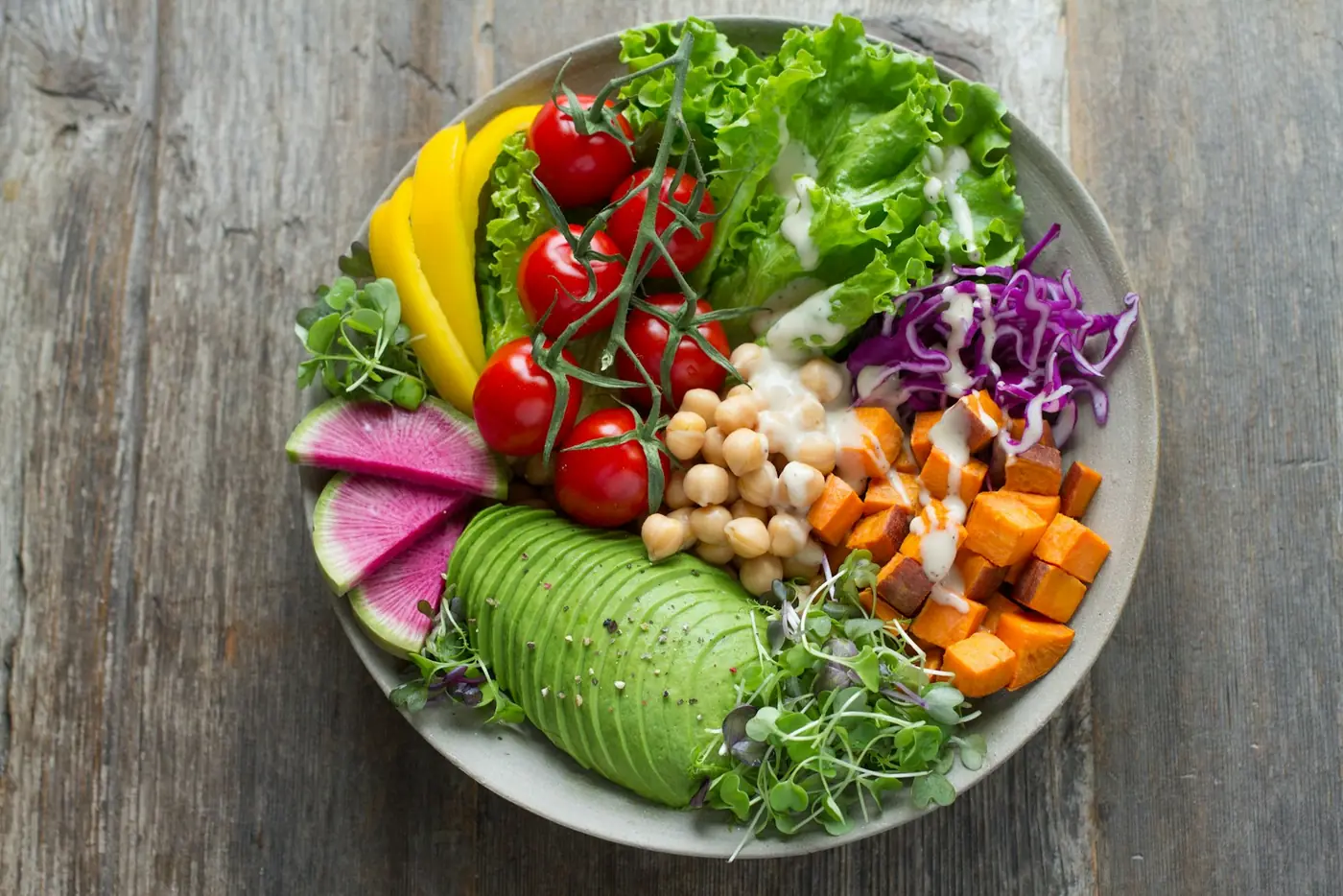
What macros are
Macros, short for macronutrients, are the three nutrients that give you calories:
| Macro | Calories per gram | Main job |
|---|---|---|
| Protein | 4 | Keeps and builds muscle, keeps you full |
| Carbs | 4 | Main fuel for your brain and workouts |
| Fat | 9 | Hormones, vitamin absorption, flavor |
Step 1: set your calories
Find your daily burn with the TDEE calculator, then subtract about 300 to 500 calories for weight loss. That's your daily calorie target.
Explainer · 0:21
Read the transcript
- Your body burns energy even at rest. That's your BMR: about 1,528 kcal a day for a 35-year-old woman who is 5 ft 6 in and 180 lb.
- Daily movement multiplies it. Light activity is × 1.375, so 1,528 becomes about 2,101 kcal. That's your TDEE.
- Eat about 500 kcal less than your TDEE and you're in a deficit: around 1,601 kcal a day.
- That's roughly 1 lb a week at first. Loss slows as your body adapts, so treat the number as a starting point and adjust.
Step 2: set protein first
For weight loss, a common target is 1.2 to 1.6 grams of protein per kilogram of body weight. At 180 pounds (about 82 kg) that's roughly 98 to 131 grams. The protein floor calculator works it out for you.
Step 3: split the rest
Give fat at least 20 to 25 percent of calories, then fill the rest with carbs. The National Academies' healthy ranges are 45 to 65 percent of calories from carbs, 20 to 35 percent from fat and 10 to 35 percent from protein.
Worked example, 1,800 calories: 120 g protein is 480 calories. 60 g fat is 540 calories. That leaves 780 calories, or about 195 g of carbs.
Or skip the math and let the macro calculator do it.
Macro targets at common calorie levels
| Calories | Protein | Carbs | Fat |
|---|---|---|---|
| 1,400 | 105 g | 140 g | 47 g |
| 1,600 | 120 g | 160 g | 53 g |
| 1,800 | 135 g | 180 g | 60 g |
| 2,000 | 150 g | 200 g | 67 g |
| 2,200 | 165 g | 220 g | 73 g |
This uses a 30% protein, 40% carb, 30% fat split. See more levels on the macro calculator.
Common macro-counting mistakes
- Not weighing oils and sauces. A tablespoon of oil is about 120 calories.
- Mixing raw and cooked weights. Pick one and stick to it.
- Chasing perfect numbers. Consistency over weeks matters more.
- Forgetting drinks. Coffee drinks and alcohol count.
A sample 1,800-calorie day
Here's what aiming for 120 grams of protein can look like. Amounts are approximate.
| Meal | Food | Protein |
|---|---|---|
| Breakfast | 1 cup plain Greek yogurt, berries and a spoon of oats | about 25 g |
| Lunch | 4 oz chicken breast, 1 cup rice, roasted vegetables | about 38 g |
| Snack | Apple and 2 cheese sticks | about 14 g |
| Dinner | 5 oz salmon, potatoes and a salad | about 35 g |
That's about 112 grams, within 10 grams of the goal, which counts as a win. See full splits for this level on the 1,800-calorie macros page.
Step 4: check and adjust
Give your numbers 2 to 3 weeks before you change anything. Then look at your weekly average weight:
- Losing about 0.5 to 1 percent a week: keep going.
- Losing faster and feeling drained: add 100 to 200 calories, mostly from carbs.
- No change for 3 to 4 weeks: trim 100 to 150 calories from carbs or fat, not protein, while staying above your calorie floor.
Log weigh-ins in the weigh-in tracker to see the trend instead of daily bumps.
When counting may not suit you
Tracking numbers helps many people, but it isn't for everyone. If logging food makes you anxious, leads to guilt or brings back past eating-disorder patterns, it's okay to stop. A plate method or a registered dietitian can get you to the same place more gently.
If you take a GLP-1 medicine and eat much less than before, put protein first and let the rest flex. See protein on a GLP-1.
Macros for different situations
The same basic steps work for most people, but a few situations call for small tweaks:
| Situation | Protein | Carbs and fat |
|---|---|---|
| Weight loss, mostly sitting | 1.2 to 1.6 g/kg | Flexible; split to taste |
| Weight loss plus regular lifting | The upper end, about 1.6 g/kg | More carbs around workouts |
| Older adults | The upper end may help protect muscle | Flexible |
| Type 2 diabetes | Ask your care team | Carb amount and timing may matter more |
These are general starting points, not medical advice. A registered dietitian can tailor them, and you should check with your clinician before raising protein if you have kidney disease.
How to track without losing your mind
- Use a food-tracking app and a cheap kitchen scale for a few weeks to learn portions.
- Repeat meals you like. Five go-to breakfasts and lunches make tracking easy.
- Aim for protein within about 10 grams of your target. Carbs and fat can vary day to day.
- After a month, many people switch to tracking protein only.
Run your numbers
Keep reading
Common questions
What is a good macro ratio for weight loss?
There's no single best ratio. Set protein first (1.2 to 1.6 g/kg), keep fat at 20 percent or more of calories, and give the rest to carbs.
Do I have to hit my macros exactly?
No. Staying close to your calorie target and protein goal most days matters far more than exact carb and fat numbers.
Is counting macros better than counting calories?
For weight loss alone, total calories matter most. Tracking protein on top helps you keep muscle and feel fuller.