
The metabolism myth
Many people believe metabolism drops sharply in their 30s and 40s. A 2021 study in Science, led by Herman Pontzer, pooled measurements from more than 6,400 people aged 8 days to 95 years in 29 countries. After adjusting for body size and fat-free mass, daily energy expenditure was stable from about age 20 to 60. It declined after 60, by roughly 0.7% a year.
That doesn't mean nothing changes. It means the usual causes after 40 are less about a broken metabolism and more about muscle, movement, sleep, stress and medicines.
What the equations say
Standard formulas agree that age matters only modestly. Using the Mifflin-St Jeor equation, a woman who is 5 ft 4 in and 180 lb burns about 1,531 calories at rest at age 28 and about 1,431 at 48. That's 100 calories a day across 20 years, about the size of a small snack.
On a lightly active day her total burn falls from about 2,106 to 1,968. Changes in movement are often bigger than that: fewer steps from desk work, commuting and family schedules can cost a few hundred calories a day. See TDEE for a 180 lb woman.
Muscle is the real change
Adults tend to lose muscle gradually with age, a process called sarcopenia when it becomes significant. Less muscle means less strength and slightly less energy burned, and dieting without strength work can speed the loss.
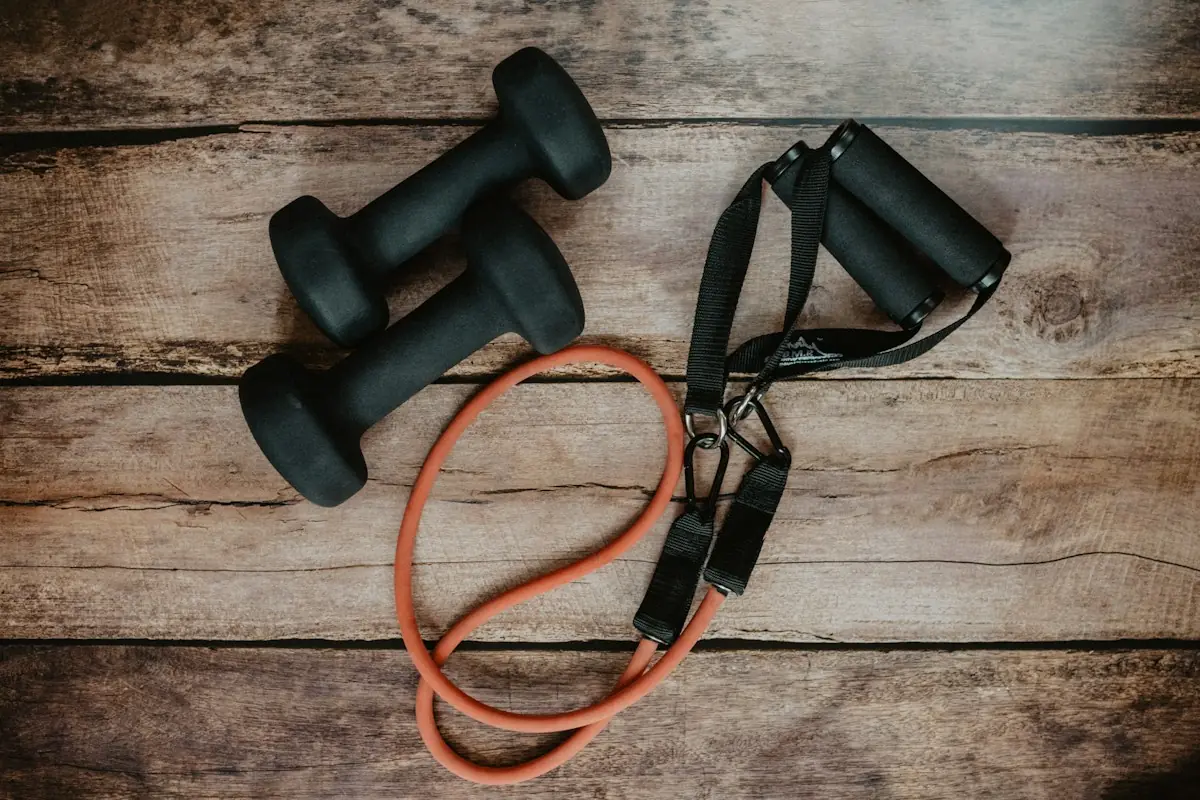
National guidelines call for muscle-strengthening activity on at least 2 days a week, working all major muscle groups. Squats, push-ups, rows and carries are enough to start. Read strength training for beginners and use the one-rep max calculator to track progress.
Perimenopause and menopause
In a 2019 analysis from the SWAN study of midlife women, fat mass rose faster once the menopause transition began, from about 1% a year to about 1.7% a year, while lean mass shifted from small gains to a slow decline. Weight rose steadily, about 0.25 kg (roughly 0.5 lb) a year, and these changes leveled off after menopause.
Fat also tends to shift toward the abdomen in midlife. Hot flashes and night sweats can disrupt sleep, which affects appetite. If symptoms are hard to live with, talk with your doctor about treatment options.
Protein matters more now
Protein helps protect muscle during weight loss. A common target is 1.2 to 1.6 g per kg of body weight a day. At 180 lb (about 82 kg), that's roughly 98 to 131 g. Spreading it across meals, about 25 to 35 g each, is easier than one large serving.
Find your range with the protein calculator or see protein needs at 180 lb. Breakfast is often the lightest meal, so try ideas from high-protein breakfasts. If you have kidney disease, ask your doctor before raising protein.
Sleep, stress and alcohol in midlife
Midlife often brings the busiest years: demanding jobs, children, aging parents. Sleep tends to get shorter, and the CDC recommends 7 or more hours for adults up to 60. Short sleep is linked to more hunger and less energy for activity the next day.
Alcohol is another quiet factor. A couple of drinks most evenings can add roughly 200 to 300 calories a day and make late-night snacking more likely. If weight has crept up, try cutting weekday drinks for a month and see how your sleep and the scale respond.
A plan for your 40s and 50s
- A modest gap. 300 to 500 calories below your burn. Use the calorie deficit calculator.
- Strength 2 to 3 days a week, plus 150 minutes of moderate activity such as brisk walking.
- Steps through the day. Short walks break up long stretches of sitting.
- Sleep 7 hours or more. Poor sleep tends to raise appetite.
- Review your medicines. Some antidepressants, steroids, diabetes medicines and others can affect weight. Don't stop any without your prescriber.
When to get checked
Ask your doctor about thyroid function, blood sugar, blood pressure and sleep apnea if your weight is climbing without a clear reason. Men may also ask about testosterone if they notice low energy and muscle loss. For adults with a BMI of 30 or more, or 27 or more with a weight-related condition, GLP-1 medicines may be an option, and keeping muscle while taking them matters. See muscle loss on GLP-1s, or ask a licensed clinician in your state to reach out.
Run your numbers
Keep reading

Common questions
Does metabolism slow down after 40?
Not much, according to a 2021 study of more than 6,400 people. Adjusted for body size, energy use was stable from about 20 to 60 and declined after 60.
Why is it harder to lose weight after 40?
Common reasons include gradual muscle loss, less daily movement, poorer sleep, stress, medicines and, for women, the menopause transition.
What is the best exercise for weight loss after 40?
A mix of strength training at least 2 days a week and about 150 minutes a week of moderate activity such as brisk walking.
How much protein do I need after 40 to lose weight?
Many people do well with about 1.2 to 1.6 g per kg of body weight a day, spread across meals. Ask your doctor first if you have kidney disease.
Does perimenopause cause weight gain?
Weight tends to rise steadily in midlife. During the menopause transition, fat gain can speed up and shift toward the belly while lean mass declines.
Sources
- Pontzer H et al. Daily energy expenditure through the human life course (Science 2021)
- Greendale GA et al. Changes in body composition and weight during the menopause transition (JCI Insight 2019)
- CDC: Physical activity guidelines for adults
- CDC: About sleep
- Mifflin MD et al. A new predictive equation for resting energy expenditure (1990)
Clinician review pending. Drafted from primary sources and waiting for sign-off by a licensed clinician (MD, DO or PharmD) before launch. Every number is checked against its source. Drug facts are re-checked quarterly, prices monthly and whenever a label changes. How we review · Report an error