What recomposition is
Short answer: yes, you can lose fat and build muscle at the same time, especially if you're new to lifting or have more fat to lose. It takes enough protein, a small calorie deficit and steady strength training.
Normally you lose fat in a deficit and build muscle in a surplus. Recomposition does a bit of both at once. Your weight may barely change while your body shape does.
Who it works best for
- People new to strength training
- People coming back after a break
- People with more body fat to lose
Lean, experienced lifters usually see slower recomposition and do better with separate cutting and building phases.
Explainer · 0:22
Read the transcript
- Not all the weight you lose is fat. In trial body scans, roughly a quarter to two-fifths of weight lost on GLP-1s was lean mass.
- Eating enough protein and doing strength training both help protect that muscle while the weight comes off.
- A common target while losing weight is 1.2 to 1.6 grams of protein per kilogram a day. At 180 lb that's about 98 to 131 grams.
- Split it across meals. About 30 to 45 grams at each of three meals is far easier than catching up at night.
Your calorie, protein and training setup
- Calories: a small deficit of about 200 to 300 under your TDEE
- Protein: the high end, around 1.6 g/kg or more. Check with the protein calculator
- Training: full-body strength 3 or 4 days a week, adding weight or reps over time
- Sleep: 7 or more hours
A 12-week recomposition plan
| Weeks | Training | Eating |
|---|---|---|
| 1 to 4 | Learn the main lifts, 3 days a week | Small deficit, protein near 1.6 g/kg |
| 5 to 8 | Add weight each week where you can | Same; adjust if weight drops fast |
| 9 to 12 | Add a 4th session or more sets | Recheck TDEE and protein |
Why the scale can mislead you
New training adds water to muscles as they recover, and muscle you build takes up less space than the fat you lose. Your weight can stay flat while your waist shrinks. That's why waist measurements, photos and strength gains are better progress markers here.
What the research says
- Beginners and people with more fat: Many training studies in these groups show fat loss and muscle gain at the same time. The evidence is fairly strong.
- A striking short study: In a 2016 trial, young men in a steep calorie deficit who ate about 2.4 g/kg of protein and trained hard 6 days a week gained about 1.2 kg of lean mass and lost about 4.8 kg of fat in 4 weeks. A lower-protein group gained almost no lean mass. The study was small, short and very intense, so most people will see slower change.
- Trained lifters: Recomposition seems possible but slower, and there are fewer studies.
A worked example
Take a 200-pound beginner who burns about 2,600 calories a day. Eating 2,300 to 2,400 calories gives a small deficit. At about 1.6 g/kg (91 kg), protein lands near 145 grams a day.
Over 12 weeks, the scale might move only a few pounds while the waist shrinks and lifts climb. Results vary a lot with age, sex, sleep and consistency. Run your own numbers on the TDEE page for a 200-lb man and the 200-lb protein page.
Common recomposition mistakes
- Too big a deficit. It tips you toward losing muscle instead of building it.
- Not adding weight or reps. Muscle grows when the work gets a little harder over time. Track lifts with the one-rep max calculator.
- Program hopping. Stick with one plan for at least 8 to 12 weeks.
- Short sleep. Recovery suffers when you're under 7 hours.
- Weighing daily and panicking. Use weekly averages and monthly measurements.
A sample training week
| Day | Session |
|---|---|
| Mon | Full body A: squat, push-up or press, row, carry |
| Tue | Walk 30 to 45 minutes |
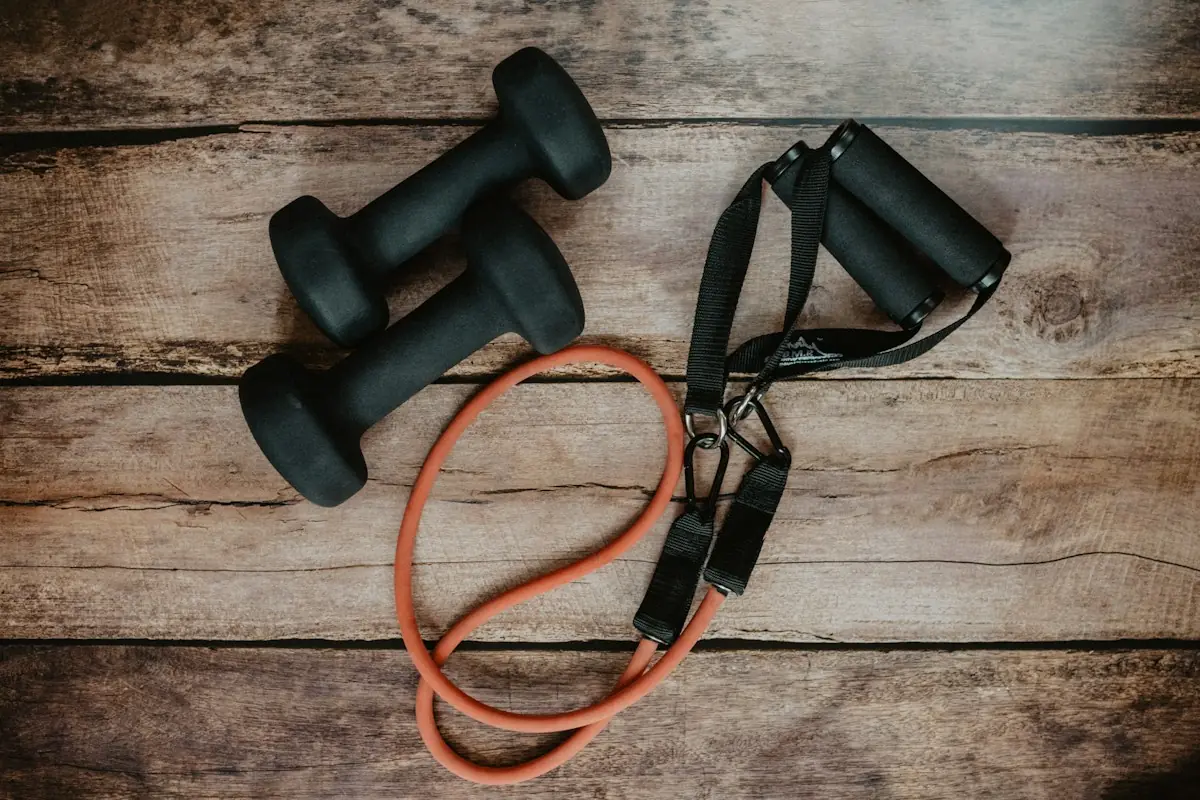
| Wed | Full body B: hinge, overhead press, band pull-down, core |
| Thu | Rest or an easy walk |
| Fri | Full body A |
| Sat | Active fun: hike, bike or a sport |
| Sun | Rest |
Next week, start with full body B so the two sessions alternate. Do 2 to 4 sets of 6 to 12 reps, ending each set with 1 or 2 reps left in the tank.
Eating for recomposition
- Spread protein over 3 or 4 meals, about 25 to 40 grams each
- Eat some carbs before and after training to fuel hard sessions
- Keep fat moderate, around 20 to 35 percent of calories
- Don't cut calories further on rest days unless your trend calls for it
See a full split for your target on the macro calculator.
How to track it
Track your waist, your lifts and monthly photos. Estimate body fat with the body fat calculator every 4 weeks. If strength climbs and your waist shrinks, it's working.
Run your numbers
Keep reading

Common questions
Is body recomposition possible?
Yes, especially for beginners and people with more body fat. Experienced lean lifters see slower results.
Should I eat at maintenance or a deficit for recomposition?
A small deficit or maintenance both work. A small deficit tilts results toward fat loss.
How long does body recomposition take?
Noticeable changes often show in 8 to 12 weeks of consistent training and eating.